Provenance
Made in Ubrique, Spain.
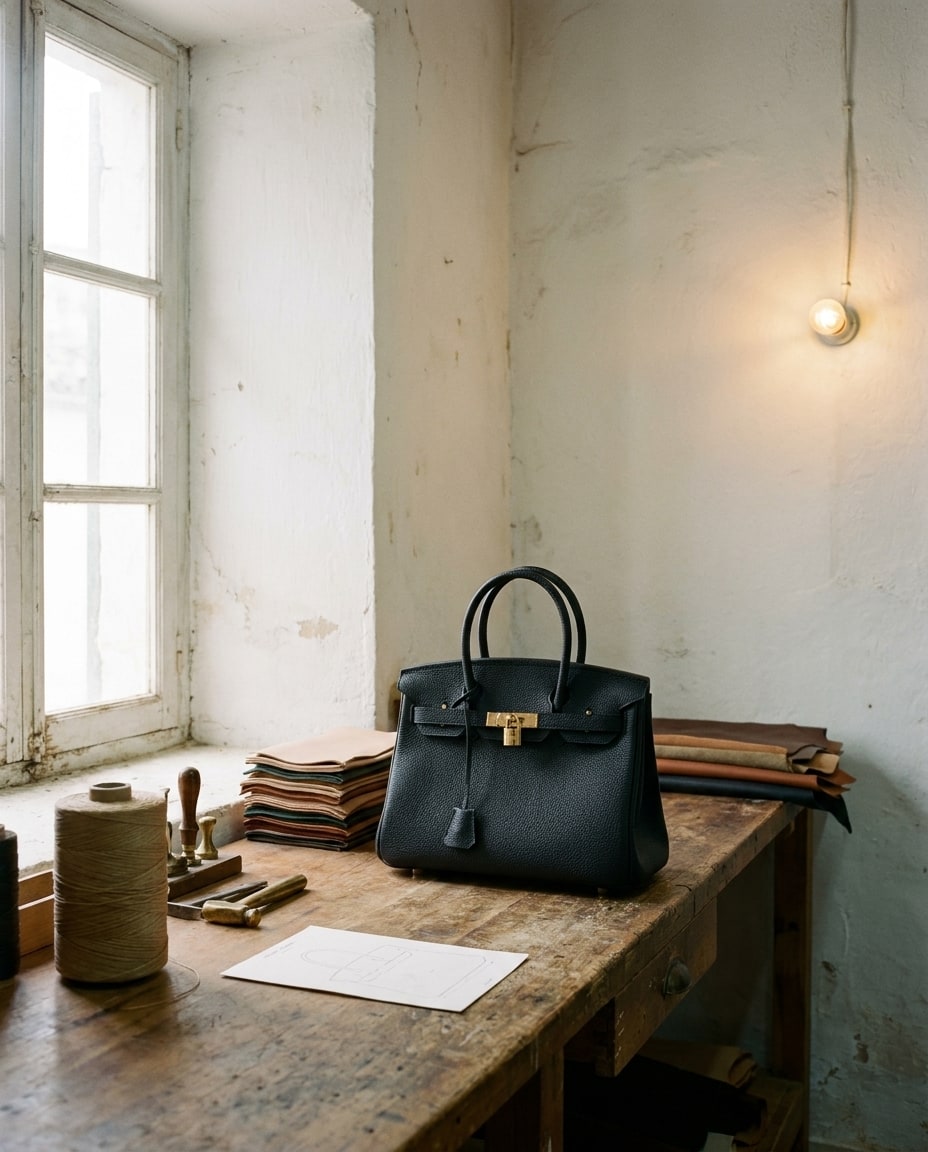
Maison Aurelle handbags are hand-finished in Ubrique, a town in the Cádiz mountains of Andalusia that has made leather goods for over a century. This page lists what goes into the Madrid, piece by piece, and how you can check each claim on the bag in your hands.
Why Ubrique
Ubrique is a small town, and leather is most of what it does. The workshops there cut, stitch, edge-paint and assemble bags by hand for houses across Europe, and the skills pass from one generation of artisans to the next. A structured top-handle bag is the hardest shape in the trade to get right: it has to stand square when empty and hold that line for years. That is the work Ubrique is known for, and it is why the Madrid is made there and nowhere else.
Each bag takes two artisans about eleven days from cut hide to finished piece. Every Madrid leaves the workshop numbered, with a card signed by the person who finished it.
The leather
1.4 mm full-grain Tuscan calfskin, vegetable-tanned over six weeks. The hides come from Tuscany and are tanned with vegetable tannins rather than chrome, which takes about six weeks instead of a day. The grain is not corrected, embossed or coated: what you see is the hide itself, so it develops a patina rather than peeling. At 1.4 mm the leather is thick enough to hold structure on its own, without a plastic or cardboard stiffener underneath.
How to check: look at the cut edge inside the bag. Full-grain leather shows one continuous fibre through its thickness. Bonded or coated leather shows layers.
The stitching
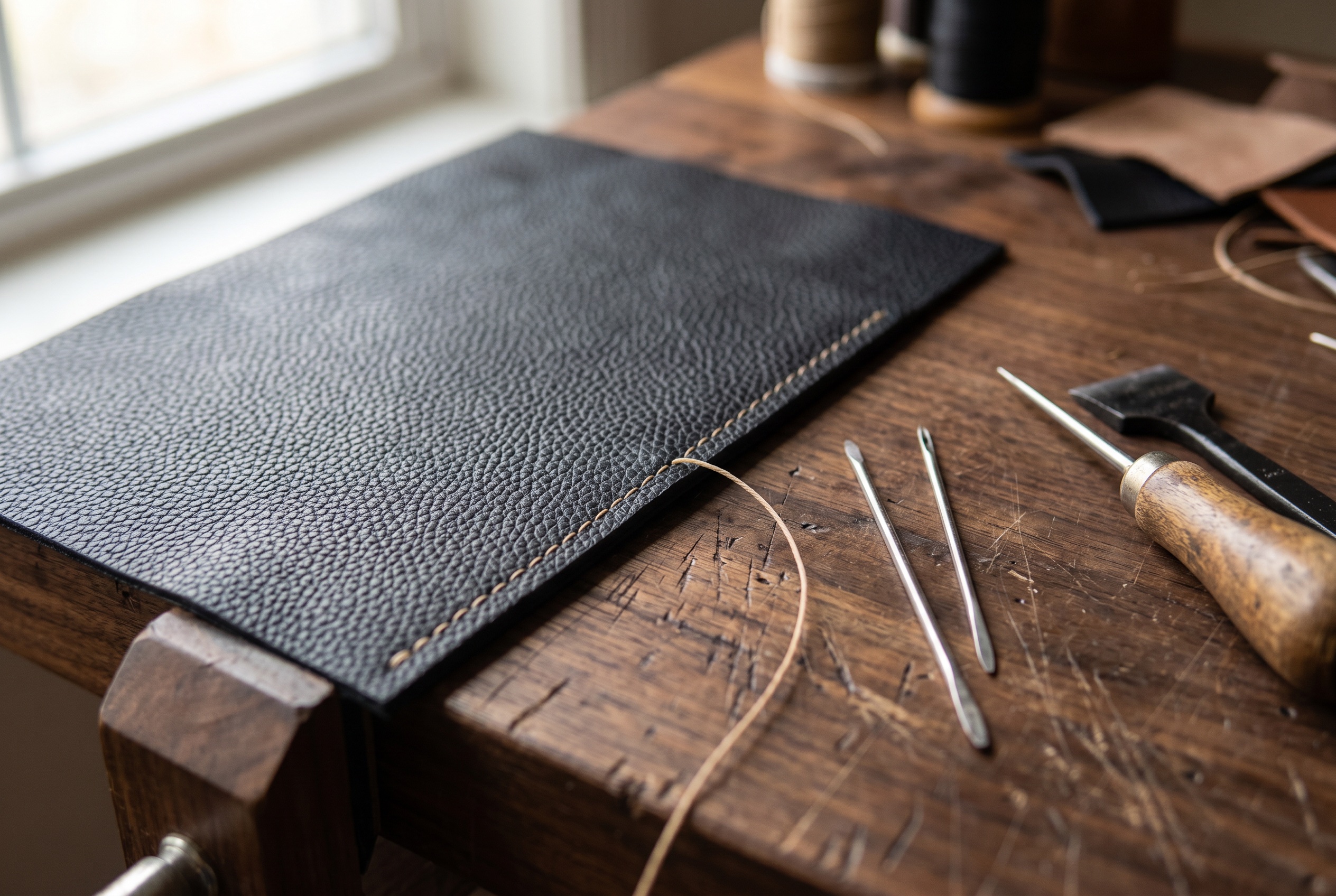
Saddle-stitched by hand at nine stitches per inch, waxed linen thread. Saddle stitching uses two needles on one thread, passed through each hole from both sides and pulled tight by hand. If one stitch is ever cut, the rest hold. A sewing machine uses a lockstitch, which unravels from a single break. Handles and base corners, the two places a bag fails first, are saddle-stitched on every Madrid.
How to check: count the stitches along one inch of the handle base. You should count nine. Look at the thread from both sides: a saddle stitch slants the same way on the outside and the inside.
The hardware
Solid brass, sand-cast, 18-micron gold finish, hand-polished. The turn-lock plate, the padlock and the four feet are sand-cast in solid brass, then plated with gold to 18 microns and polished by hand before they go near the leather. Most handbag hardware is hollow and plated at two or three microns; it tarnishes within a year. Solid brass at this plating depth does not.
How to check: solid brass is heavy for its size and cold to the touch. Tap the padlock against the plate: it rings rather than clicks.
The base, the edges, the lining
Four solid brass feet, hand-set into a reinforced base. They lift the leather off the ground and take the wear the corners would otherwise take. Every edge is hand-painted in several thin coats, sanded between each, so the paint flexes with the leather instead of cracking. The lining is suede-finished calfskin, tone-matched, not fabric, so the inside wears the way the outside does.
What that adds up to
The Madrid is a structured leather top-handle bag hand-finished in Ubrique, Spain, in three sizes (25, 30 and 35 cm) and ten colours, from $325 to $545. Because the workshop that made it is the workshop that repairs it, every Madrid carries a lifetime repair guarantee. The details of that guarantee are on the care and repair page; sizes and what fits in each are on the size guide.
Shop the Madrid · from $325 · complimentary shipping and 30-day returns.